6 Star vs 7 Star: What Changed in the NatHERS Energy Rating?
If you're planning a new home, you've probably seen "7 star" on your builder's quote and wondered what it means and whether it costs more.
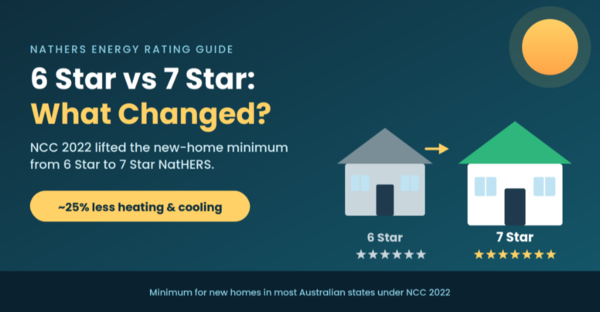
Here's the short version. Until recently, a 6 Star Rating was the minimum for most new homes in Australia. Since the 2022 update to the National Construction Code, the minimum is a 7 star energy rating NatHERS score, and new homes also have to stay within a yearly limit on how much energy they use.
In plain terms, a 7 star home uses about 25% less energy for heating and cooling than a 6 star home. Most states made the switch between October 2023 and May 2025.
This guide covers what changed, what it means for your costs and comfort, and when your state came on board.
What does a NatHERS star rating mean?
NatHERS (the Nationwide House Energy Rating Scheme) scores a home's design from 0 to 10 stars. The score shows how comfortable the house will be without heaters and air conditioners working overtime
A 0 star home barely protects you from the weather. A 10 star home stays comfortable almost all year with little or no heating or cooling.
The score is about the house itself: its layout, the direction it faces, and its walls, roof, floor and windows. It isn't about the appliances you buy.
What actually changed from 6 star to 7 star?
Here's a side-by-side look, with the details underneath.
Feature | 6 Star | 7 Star |
|---|---|---|
Minimum star rating | 6 Star NatHERS | 7 Star NatHERS |
Heating and cooling energy | Baseline | About 25% lower |
Whole of Home energy budget | Not required | Required under NCC 2022 |
Typical design response | Standard insulation and glazing | Better orientation and insulation |
Estimated extra build cost | None | About $1,700 to $2,300 (estimate) |
Summer and winter comfort | Good | Noticeably better |
The minimum score went up
Before, a 6 Star Rating was enough for a new home in most of the country. Now new houses and townhouses need to reach 7 stars.
Apartments work a little differently. Each apartment needs at least 6 stars, and the apartments in a building must average 7 stars.
There's now a limit on total energy use
This is the part people often miss. On top of the star score, a new home has to stay within a yearly energy limit for its main fixed appliances: heating and cooling, hot water, lighting, and pool and spa pumps. You may see this called the "Whole of Home" requirement.
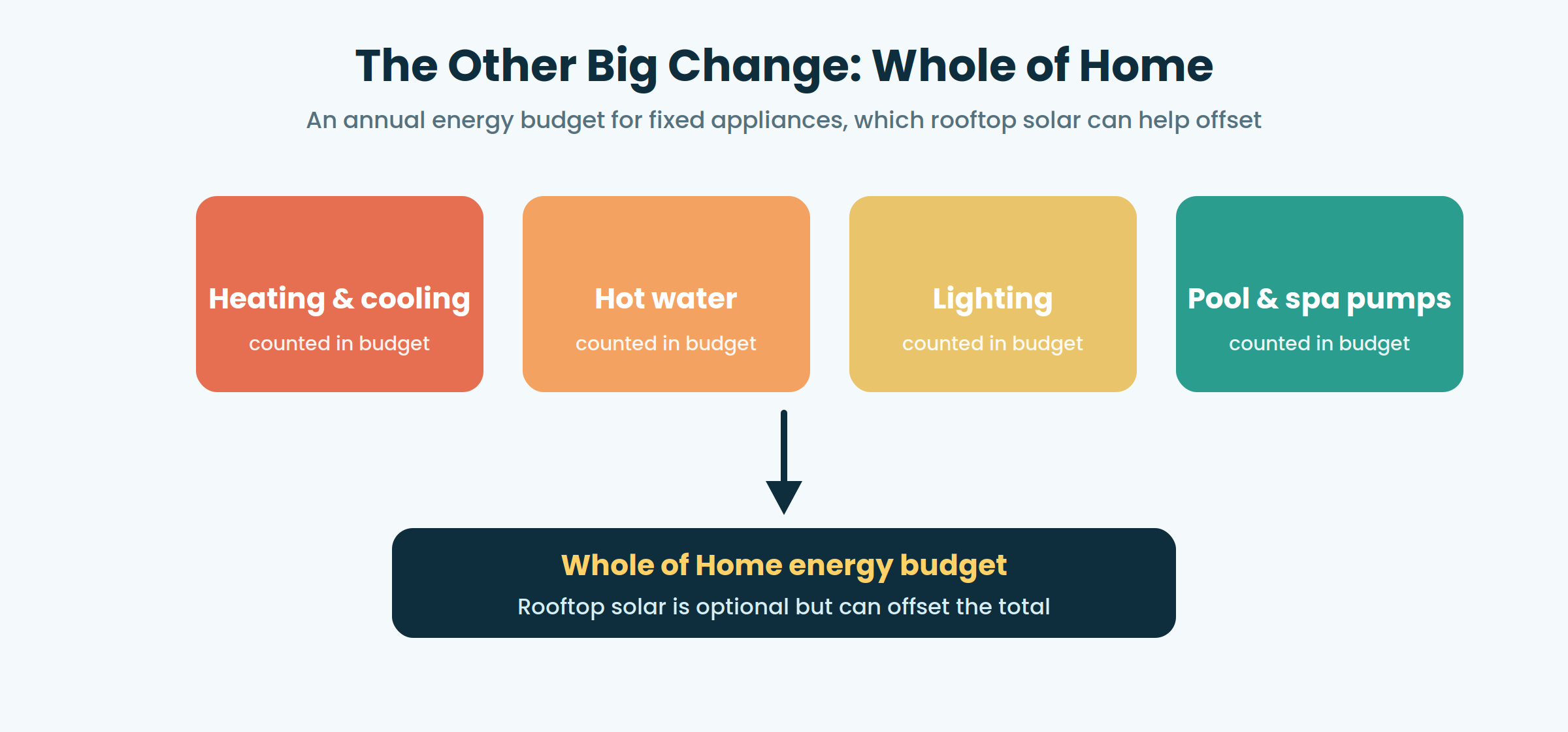
Rooftop solar can count towards that limit, but you don't have to install it. The minimum is a score of 60 on the Whole of Home scale.
A bit of flexibility in the tropics
In the hot north (climate zones 1 and 2), a house with an outdoor living area can pass at 6.5 stars. Add a ceiling fan and 6 stars is allowed. Everywhere else, 7 stars is the target.
How much better is a 7 star energy rating NatHERS home?
Government and NatHERS figures say about 25% less energy for heating and cooling than a 6 star home. Other estimates range from 24% to 30%, depending on where you live and how the house is designed.
That matters because heating and cooling make up around 40% of the energy an average Australian home uses.
One study of capital cities found an all-electric 7 star home saved about $450 a year on heating and cooling compared with a 6 star home. That was before recent power price rises, and your own savings will depend on your climate, the size of your home and how you use it.
You also get a more comfortable house. Rooms stay steadier during heatwaves and cold snaps, which helps older people, young kids and anyone who works from home.
For comparison, Victorian homes built before 2005 average less than 2 stars.
What does a 7 star home cost to build?
It depends on your design. RMIT University researchers estimated an average extra cost of about A$1,704 for a detached house or townhouse. Other industry analysis puts it closer to $2,300, paid back through lower bills in under six years.
The Victorian Government says good design early on can keep the extra cost low. Going from 6 to 7 stars usually comes down to:
- Facing the house to the sun, so it catches winter warmth and avoids summer heat
- Better insulation in the ceiling, walls or floor for your climate
- Better-performing windows
You don't need double glazing. A well-placed home can reach 7 stars with some single glazing. A badly oriented block will cost more to bring up to standard.
When did 7 star start in your state?
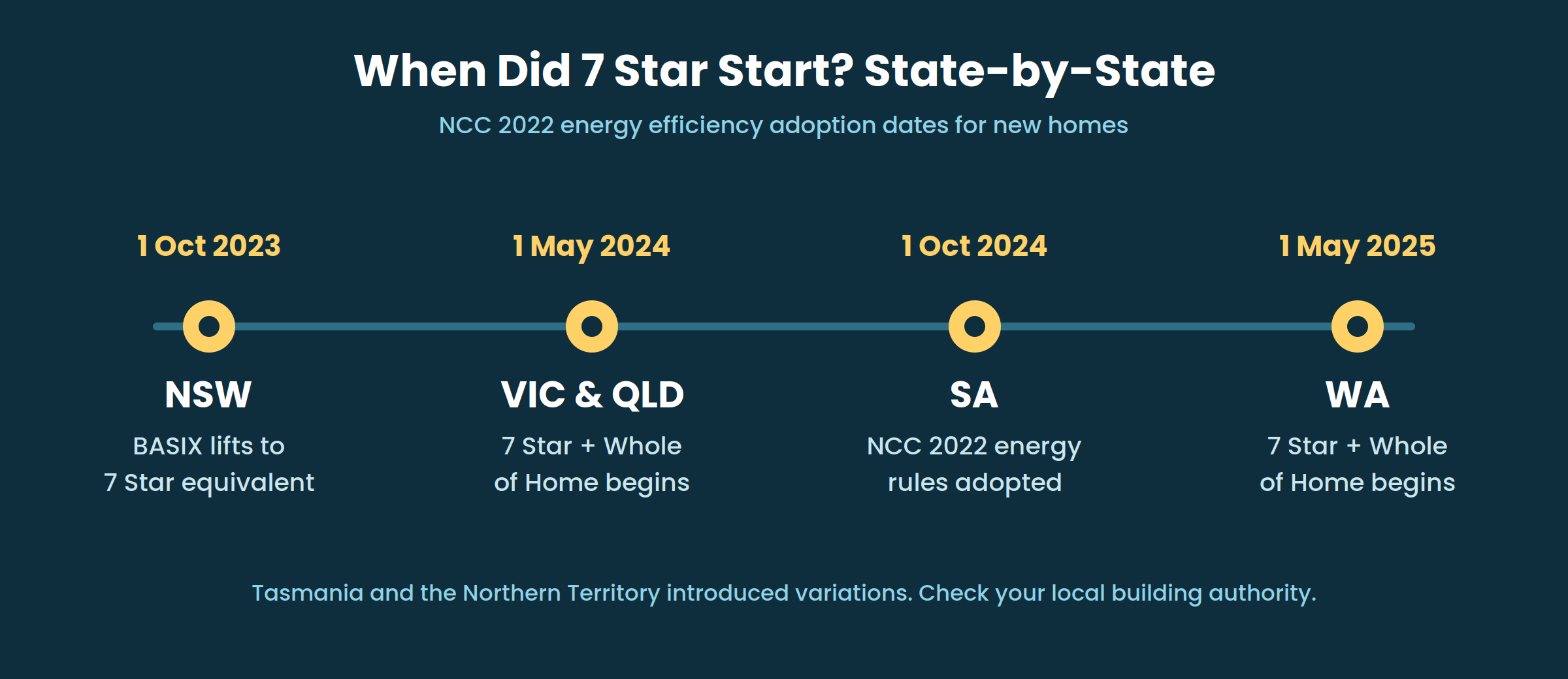
The code was published in 2022, but each state picked its own start date:
- ACT: ahead of Victoria and Queensland
- New South Wales: 1 October 2023, through its BASIX scheme
- Victoria and Queensland: 1 May 2024
- South Australia: 1 October 2024
- Western Australia: 1 May 2025
- Tasmania and the Northern Territory: made their own changes when the code launched, so check with your local building authority
The 2025 version of the code didn't change the energy rules for homes, so 7 star is still the standard.
How to get a design from 6 star to 7 star
If your plans were drawn for the old standard, these steps usually close the gap:
- Turn the living areas to face north, if your block allows it.
- Upgrade the insulation in the ceiling, walls or floor for your climate zone.
- Choose better windows, and keep east- and west-facing glass modest.
- Add eaves or shading to block summer sun and let in winter sun.
- Get an early NatHERS assessment from an accredited assessor, tweak the design, and test it again until it passes.
Testing early is the cheapest way to avoid costly changes later.
Does my existing 6 star home need upgrading?
No. The rules apply to new homes and major renovations or extensions, not to houses that are already built. NatHERS is also trialling ratings for existing homes, which will make it easier to see which upgrades are worth it.
If you own a 6 star home, the easy wins are ceiling insulation, draught sealing and better curtains or blinds.
Your questions, answered
What's the difference between a 6 star and a 7 star home?
A 7 star home uses about 25% less energy for heating and cooling. New homes must also stay within a yearly energy limit that covers heating and cooling, hot water, lighting and pool pumps.
Is a 7 star energy rating NatHERS score compulsory?
For new homes, yes in most of Australia: NSW, Victoria, Queensland, South Australia, Western Australia and the ACT. Tasmania and the Northern Territory have their own rules, so check locally.
How much extra does a 7 star home cost?
Roughly A$1,700 to $2,300 on average. Smart design can keep it lower.
Do I need solar panels?
No. Solar can help you stay within the energy limit, but it isn't required.
Can I still build a 6 star home?
In states that have adopted the new code, a 6 Star Rating generally isn't enough, apart from the hot-climate exception in climate zones 1 and 2.
Plan for 7 star from the start
Moving from a 6 Star Rating to a 7 star energy rating NatHERS minimum means a more comfortable home and lower running costs, for a small extra build cost that smart design can often shrink. The sooner you test your plans, the easier and cheaper it is.
Planning a new build or renovation? Chat with an accredited NatHERS assessor before you finalise your plans.