How Smart Home Technology Boosts Your Home Energy
A decade ago, the idea of a house adjusting itself to save energy sounded like science fiction, yet today it’s becoming the norm—especially as homeowners realise that smart technology can directly influence an energy rating assessment and shape how efficiently their property performs.
Smart home devices are intelligent enough to understand the patterns of their users, optimise energy consumption, and reduce unnecessary waste, all while keeping the house at the perfect temperature.
In this article, we will look at the role that smart home integration can play in the sustainability of the house. To learn more, let's jump into the article.
1. Smart Monitoring
The first step in making actual improvements in energy efficiency is to become aware of it. With the help of sensors and smart meters, you can track how, when, and where your home is using energy. These devices collect data and trends, which can help you identify which areas or systems in your home are using more energy than required.
This insight serves two big purposes:
• It shows patterns you might not notice, such as appliances that use power even when they’re in standby mode.
• It gives you information you can use, like automating shutdowns, moving usage to off-peak hours, or buying more efficient appliances.
With smart monitoring, you don’t have to guess where savings come from. Your home becomes a place that learns and adjusts over time.
2. Automation and Scheduling
Once you understand how your home consumes energy, the next big step is automation. Smart scheduling means that your devices will run when they are actually needed. For instance, your heating will turn down when you are not at home or asleep, but will turn on when you enter a room. These intelligent patterns help reduce overall energy demand.
Some advanced setups even link with renewable sources—like solar panels—to time heavy loads (such as washing machines or EV chargers) for when your home is generating surplus power. This kind of scheduling not only lowers your bills, but supports self-generated energy optimisation that fits with your broader sustainability goals.
By thinking about automation as a silent partner in your daily life, you allow technology to handle routine efficiency tasks while you focus on comfort and convenience.
3. Turning Data into Home Energy Profile
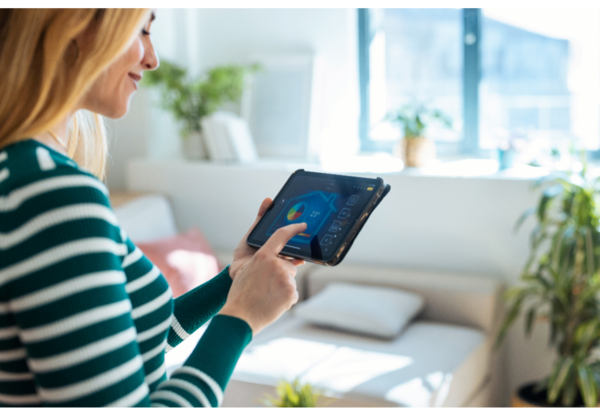
One of the most important and valuable advantages of connected devices is the ability to see what is happening. The real-time dashboard allows the homeowner to see exactly where the energy is being consumed, and this is an important part of improving the home energy rating.
When households can see how small changes affect overall usage, energy efficiency becomes tangible. It’s no longer an abstract goal—it’s measurable, trackable, and adjustable.
4. Remote Control
One of the biggest advantages of smart home technology is the ability to access the home remotely. Whether you left the thermostat on before leaving the house or you need to adjust the lighting while you’re away from home, you can do so remotely using your phone or a voice assistant.
The ability to access the home remotely means that you’re not physically tethered to the home to adjust the home's energy-using systems. But the advantage of smart home technology goes beyond just the ability to access the home remotely.
Smart home technology can also alert you if something unusual is happening at home. For example, if the refrigerator door is left open or the HVAC system is running for a long period of time, smart home technology can alert you.
5. Smart Tech System
While smart home systems help manage and reduce consumption, they also complement structural improvements such as insulation, high-performance glazing, and passive design principles. The synergy between the two technologies creates an avenue for a more holistic approach to energy efficiency.
For example, the new insulation materials are able to retain air, while the smart technologies can be used to monitor the temperatures inside the house, thereby regulating the HVAC systems to reduce wastage. In this regard, a homeowner will not only be dealing with the problem at its core but will also be ensuring that technology complements existing structural efficiencies.
Smart living doesn’t stop here—it’s an evolving path where efficiency, innovation, and comfort grow hand in hand toward achieving at least a 6 star energy rating in practice and performance.
6. Integration
Although individual smart devices may help save money, their potential is realised when they work together. This is because smart devices integrate information from different platforms. For instance, your thermostat may receive information from window sensors, lights from occupancy sensors, or even weather forecasts from blinds. This is a form of optimisation that individual smart devices cannot attain.
For example, the integration of a window and temperature sensor could prevent the waste of cooling a house when the window is open. Additionally, the integration of lighting and motion detection could significantly reduce the amount of electricity spent on lighting the house over time. This way, your home will be able to adapt naturally to reduce consumption without compromising comfort through smart choreography.
Smart integration will also allow your home to expand or be upgraded in line with new technologies that become available.
7. Climate Control
Heating and cooling remain the biggest contributors to household energy use, which is why smart climate systems have such a powerful impact. Intelligent thermostats learn daily routines, detect occupancy, and even anticipate temperature changes based on forecasts.
Rather than blasting heat throughout an empty home, smart systems can provide just the right amount of heat to the areas that need it, when they need it. The result is that energy waste is reduced dramatically over time, proving that efficiency does not have to be uncomfortable.
8. Lighting and Appliances
As the climate systems take the spotlight, lighting and appliances operate in the background, providing constant cost savings. Smart lighting adjusts the lighting levels according to the amount of natural daylight available and can switch off when the rooms are unoccupied.
Appliances are also becoming smart, scheduling peak usage during off-peak hours and optimising their performance cycles. All these small changes, however, add up to a significant change in the pattern of consumption, often without the inhabitants even realising the change.
Conclusion
Whether it’s saving money, reducing pollution, or just living more mindfully, smart solutions provide the tools to make energy management easy and effective. And as we look to the future of energy, it will be those homes that combine technology with thoughtful design that are at the forefront of the movement. It is this pursuit of excellence and living more sustainably that drives informed energy rating consulting.