How 10 LED Bulbs Can Reduce Australian Household Bills
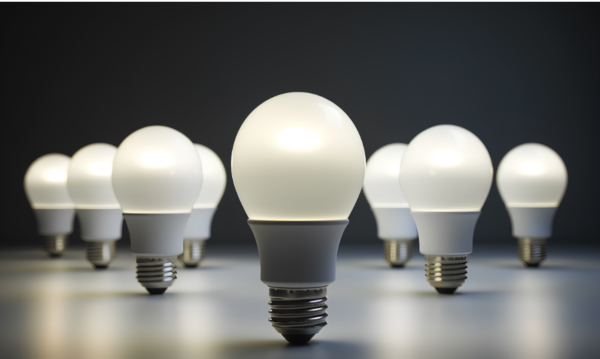
Most Australian households don’t realise how much money quietly slips through their fingers due to outdated lighting—yet a simple shift can rewrite the next decade of energy bills. Every homeowner trying to understand their electricity usage often begins with an energy rating assessment, and lighting usually turns out to be one of the most overlooked culprits. When we break down the numbers, a set of just 10 LED bulbs has the power to reduce long-term energy costs in ways most families never expect.
Australia’s rising electricity rates, paired with the government’s continued push for more energy-efficient homes, make this an ideal moment for homeowners to reconsider how their lighting choices influence their budgets. And because LED bulbs are far more advanced today—longer-lasting, brighter, and cheaper than they were ten years ago—their financial impact is even more impressive.
Now let's do some calculations, have a look at some more useful information, and discuss why this could be one excellent potential outcome for households in Australia.
Why LED Bulbs Are Taking Over Australian Homes
Surprisingly, one of the most influential differences between traditional bulbs and LEDs comes down to energy conversion. Incandescent bulbs waste up to 90% of their energy as heat—an astonishingly inefficient system that Australians tolerated for decades simply because there were no better options.
But LEDs flipped the entire conversation. They use around 75–85% less electricity, turn almost all their energy into light rather than heat, and need to be replaced a fraction as often. Since they also provide better illumination quality, they’re no longer just the “eco choice”—they’re the smart financial choice.
The average Australian household has anywhere from 20 to 40 bulbs installed, which means the financial gains multiply quickly. Even focusing on just 10 bulbs offers startling insight into how much households can save over ten years.
LED Efficiency in the Australian Context
Building on this, another major factor is that Australia’s electricity prices remain among the highest in the developed world. Any device that uses power inefficiently has a magnified effect on your bill compared to countries with cheaper electricity.
Even small savings per bulb can accumulate into substantial long-term reductions.
Around this point in the discussion, many homeowners begin looking at broader household efficiency improvements—and some turn to a home energy rating to understand the next steps. Lighting is just one piece of the puzzle, but it’s often the easiest and most affordable starting point for boosting household sustainability.
How LED Savings Add Up Over Time

Curiously, many people only calculate savings based on electricity consumption per year, rather than considering the combined effect of bulb lifespan, replacement cost, and energy consumption over a decade.
A standard incandescent bulb lasts around 1,000 hours, while a high-quality LED can last 15,000–25,000 hours. That alone reduces the number of replacements from 10–15 bulbs per socket to just one LED for the entire decade. Multiply that across 10 bulbs, and the cost difference becomes immediately clear.
Electricity savings make the gap even wider. A typical incandescent uses 60 watts, while a comparable LED uses just 8–10 watts. With an average usage of 3 hours per day, LEDs save roughly $15–$18 per bulb per year. Across 10 bulbs, that’s $150–$180 annually and more than $1,500 over ten years, just in energy consumption.
When you add avoided replacement costs—which often total another $100–$200—the real savings surpass $1,600–$1,800 in many homes.
How to Calculate Your Own LED Savings
Interestingly, calculating your personal savings potential is much easier than most people realise. You only need three pieces of information:
1. How many bulbs do you plan to replace
2. Their wattage difference (old bulb wattage minus new LED wattage)
3. Your electricity rate (cents per kilowatt-hour)
For example, if you’re replacing a 60W bulb with a 9W LED:
• Difference: 51 watts saved
• At 3 hours of usage per day:
51W × 3h = 153 watt-hours/day
= 0.153 kWh/day
• Over a year:
0.153 × 365 = 55.8 kWh saved per bulb
• At 30c per kWh:
55.8 × 0.30 = $16.74 saved per bulb per year
Multiply by 10 bulbs, and you’re saving $167 per year, just like the earlier estimate.
This makes it easy for Australian households to tailor their own calculations—and many are surprised by the results.
Some homeowners seek expert advice during this process, often turning to professional energy rating consulting when they want a deeper understanding of how lighting interacts with broader household energy efficiency. While not necessary for calculating bulb savings, it provides valuable insights for those wanting to go further.
Practical Tips for Choosing the Right LED Bulbs

Delving into bulb types, brightness, and colour temperature can seem confusing at first, but the good news is that most modern LEDs are designed for simple, consumer-friendly selection.
Here’s a quick guide:
✔ Choose the right brightness (lumens, not watts)
Watts measure energy use; lumens measure brightness. A 60W incandescent bulb = 800 lumens in an LED bulb.
✔ Pick a colour temperature that suits each room
• Warm white (2700K–3000K): bedrooms, living rooms
• Cool white (3500K–4100K): kitchens, bathrooms
• Daylight (5000K+): garages, study areas
✔ Check compatibility with dimmer switches
Not all LEDs work with older dimmers, so choose “dimmable” versions if required.
✔ Prioritise quality
Cheaper LEDs often flicker, burn out early, or deliver uneven lighting. Trusted brands last longer and deliver smoother illumination.
✔ Consider smart LEDs
These offer adjustable brightness, scheduling, automation, and compatibility with smart home systems. They’re more expensive but can deliver additional energy savings.
How LED Adoption Supports Future-Ready Homes
The move to LED lighting is part of an overall drive in Australia toward sustainable housing. As more homeowners install solar systems, battery storage, and energy-efficient appliances, lighting remains one of the easiest and least costly upgrades available.
Impressive as that may be, that financial benefit multiplies when 10 LED bulbs are combined with efficient water heaters, insulation upgrades, and modern appliances. It is part of a wider desire among households today to reduce electricity bills and carbon emissions and further decrease dependence on traditional sources of power.
The LEDs are a gateway to those broader improvements, showing the homeowner just how easy and impactful efficiency upgrades can be.
Final Thoughts
By replacing just 10 bulbs, Australian households can save well over $1,500 across a decade—often closer to $1,800 when accounting for avoided replacement costs. The environmental benefits, safety improvements, and enhanced lighting quality only sweeten the deal.
When you combine these advantages with Australia’s rising energy costs, switching to LEDs becomes one of the smartest financial decisions a household can make without major renovations or high upfront expenses.
Families looking to boost their home’s overall efficiency—and even improve future property value—can place LED lighting at the top of their upgrade list. And for those striving toward more sustainable homes, achieving a 6 star energy rating becomes far more accessible with simple changes like this.